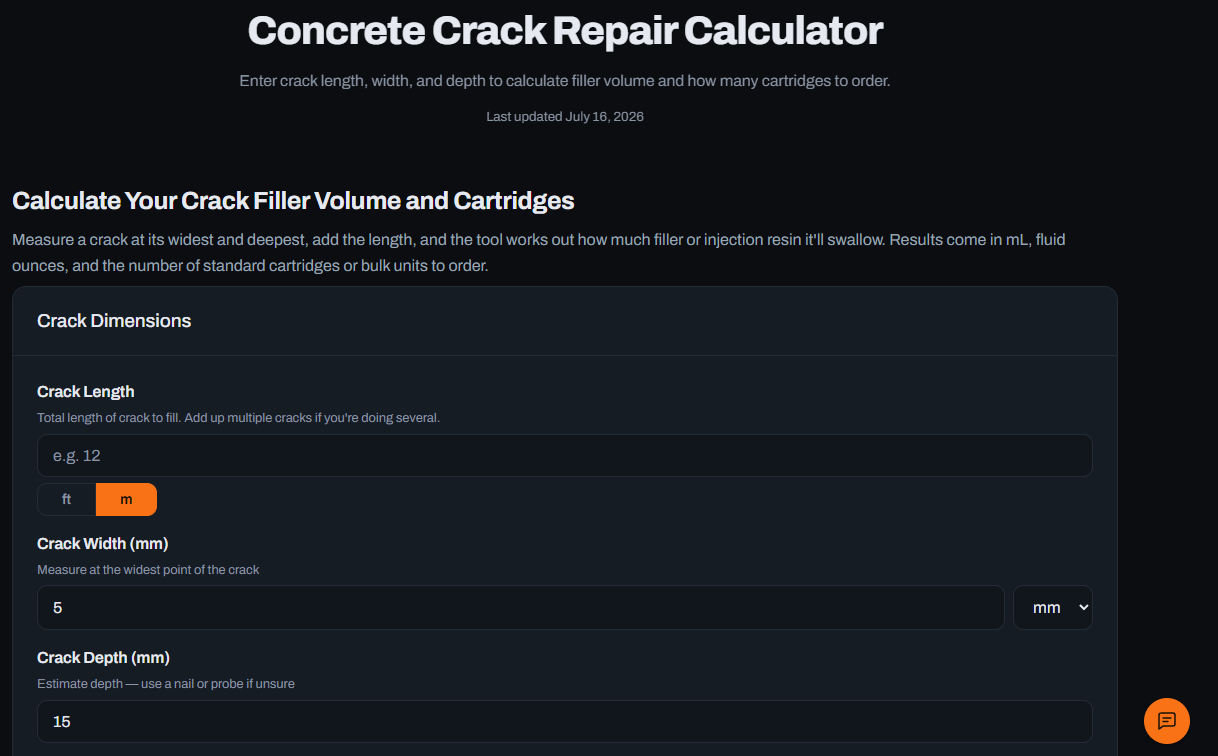
A contractor using a concrete crack repair calculator can estimate filler requirements before arriving on site, but the real value comes from connecting that number to the wider project schedule. Crack dimensions, repair material, grinding, coating layers, temperature, and return-to-service timing all influence whether a fast-track flooring job stays on plan.
Short project windows leave little room for guesswork. A warehouse aisle, garage, workshop, or retail back room may need to be prepared, repaired, coated, and reopened within a limited period, so estimating each stage separately is more reliable than using one overall duration.
Measure Repairs Before Ordering Material
Concrete cracks vary in length, width, and depth, and those dimensions determine how much filler is required. A visual estimate can understate volume when cracks are deeper than they appear.
Once the repair quantity is known, a polyaspartic cure time calculator can help estimate pot life, recoat timing, and return-to-service windows based on temperature and product speed. The result should still be checked against the exact product’s technical data because cure behavior varies by formulation and site conditions.
Do Not Treat Every Crack the Same
A calculator can size filler, but it cannot diagnose why a crack exists. Stable shrinkage cracks, movement joints, edge damage, and structural concerns should not automatically receive the same repair method.
The slab should be inspected before repairs begin. If a crack appears active, unusually wide, repeatedly wet, or associated with movement, further assessment may be needed before coating.
Using the correct repair material matters as well. Fast-curing polyurea, epoxy repair products, or other fillers can have different working times, flexibility, and compatibility requirements.
Grind Before Finalizing the Repair Plan
Mechanical preparation often reveals more about the slab than the initial walk-through. Old coatings, dirt, and contamination can hide small cracks or damaged edges.
Grinding can also expose defects enough for proper cleaning and repair. Contractors should therefore avoid ordering exact filler quantities from photographs alone when the slab has not yet been prepared.
A reasonable allowance can help, but measurements after preparation provide a better basis for final material use.
Sequence Repairs Around the Coating System
Crack repair is not an isolated task. The chosen filler must fit within the primer, base coat, broadcast, and topcoat sequence that follows.
Contractors should confirm when the repair can be ground flush, when it can be coated, and whether the next layer requires a particular surface condition. A fast-setting product only saves time if it remains compatible with the rest of the system.
Recording repair locations can also help during final inspection on larger floors.
Understand How Temperature Changes the Clock
Polyaspartic materials are valued for rapid curing, but faster chemistry also means less working time. Warm conditions can shorten pot life and recoat windows, while cooler temperatures can extend them.
Contractors should check air and slab temperature where product instructions require it. Material stored in a hot vehicle may also behave differently from material kept within the recommended range.
A cure-time estimate is a planning tool, not permission to ignore the manufacturer’s application limits.
Separate Recoat Time From Return-to-Service Time
A floor may be ready for the next layer before it is ready for foot traffic, shelving, forklifts, or vehicles. These are different milestones and should be scheduled separately.
This is especially important on commercial jobs where reopening too early can damage a surface that appears dry. The program should identify when each type of traffic can safely return.
Clients should receive the same guidance so equipment is not moved back simply because the crew has left.
Build Contingency Into Fast-Track Work
Even well-planned projects encounter surprises. Additional cracks may appear after grinding, repairs may take longer than expected, or temperature may shift during installation.
A small schedule buffer is more realistic than assuming every stage will finish at the earliest possible time. Backup repair cartridges, clean mixing tools, and application equipment should also be ready before work begins.
This prevents a minor repair issue from consuming the entire recoat window.
Record Actual Times for Future Estimates
Completed jobs provide useful planning data. Contractors can record repair volume, product used, slab temperature, cure time, recoat timing, and actual return-to-service conditions.
Over time, these records improve future estimates because they reflect the crew’s real workflow rather than generic assumptions.
Conclusion
Fast-track flooring depends on accurate sequencing as much as fast-curing materials. Crack dimensions, repair volume, compatibility, temperature, recoat windows, and traffic timing all need to be understood before the first batch is mixed.
Calculators can reduce guesswork, but product data and real site conditions still control the final decision. When repair planning and cure-time planning are connected, contractors can create schedules that are faster without becoming rushed.